What Is the Difference Between Paint and Primer — and Do You Always Need It?
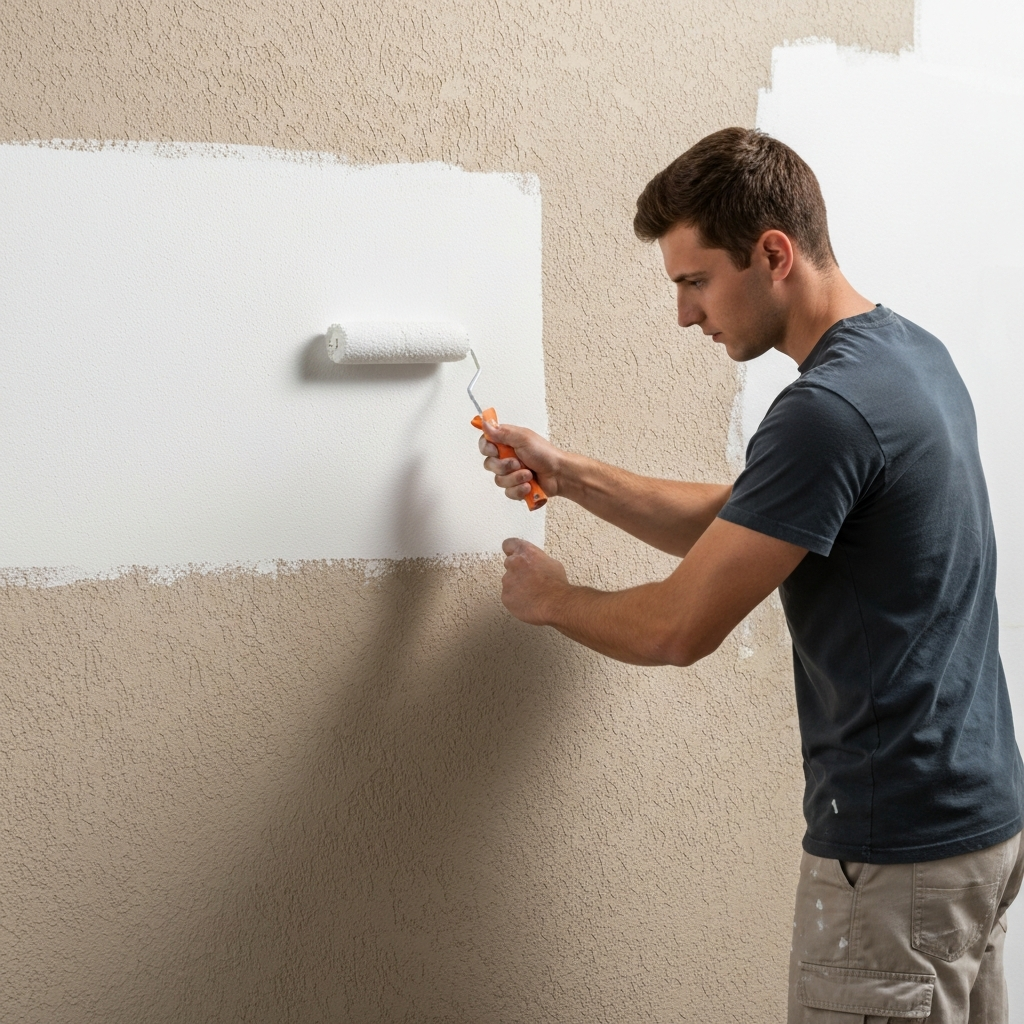
Paint vs. Primer — What Each Does,
When You Need Both, and When You Don't
The question every homeowner asks before a painting project — answered clearly
Walk into any paint store and you will find primer taking up a significant portion of the shelf space. Ask a professional painter whether you need it and they will almost always say yes — but then qualify that with "it depends." That ambiguity leaves most homeowners confused about what primer actually does, when it is genuinely necessary, and when skipping it is an acceptable shortcut.
This guide explains the actual difference between paint and primer, exactly when you need both, and the situations where a quality paint-and-primer-in-one product is a reasonable substitute.
QUICK ANSWER
Primer seals and prepares the surface. Paint provides color and protection. You always need primer on bare surfaces, stained areas, and dramatic color changes. On previously painted surfaces in good condition with minimal color shift, a quality paint-and-primer-in-one product may be sufficient.
What Primer Actually Does
Primer is a preparatory coating — its entire job is to get the surface ready for paint. It does not provide lasting color, it does not provide the durable finish that paint provides, and it is not designed to be the final layer. What it does extremely well is:
- Seal porous surfaces. Raw drywall, bare wood, and fresh plaster are highly porous — they absorb paint unevenly, which results in a blotchy, patchy appearance. Primer fills those pores and creates a uniform surface that paint can adhere to evenly.
- Improve adhesion. Primer creates a mechanical and chemical bond between the surface and the paint. On smooth or previously glossy surfaces, this bond is critical — paint applied directly to a slick surface without primer is far more likely to peel.
- Block stains and bleed-through. Water stains, smoke damage, tannin bleed from wood knots, and rust all have the ability to migrate through topcoat paint and appear on the finished surface. Stain-blocking primers contain components that chemically bind to these contaminants and prevent them from traveling through.
- Improve color accuracy. A consistent primer base makes topcoat colors appear truer and more even — especially important when painting light colors over dark surfaces.
What Paint Does That Primer Cannot
Paint is the functional and aesthetic layer of any painting project. It provides the color, sheen, and protective film that makes a surface beautiful and durable. Unlike primer:
- Paint is formulated to resist washability, moisture, UV degradation, and physical wear
- Paint contains pigments and binders designed for long-term performance on the surface
- Paint provides the color accuracy and consistency that makes a paint job look professionally finished
- The sheen level (flat, eggshell, satin, semi-gloss) is a function of the paint, not the primer
Primer alone — left as the final layer — would look dull, chalky, and uneven. It would mark easily and provide minimal protection. It is never the final coat.
When You Absolutely Need Primer
Always Use Primer When...
- Painting bare or new drywall
- Painting raw or bare wood
- Painting over a patch or repair
- Going from dark to light color
- Covering water stains or smoke
- Painting previously glossy surfaces
- Painting bare metal or masonry
- Covering wood with knots or tannins
May Skip Primer When...
- Repainting same or similar color
- Surface is previously painted and stable
- No stains, damage, or repairs present
- Using high-quality paint-and-primer-in-one
- Light color over light color (minor shift)
- Low-traffic area with minimal wear demand
New Drywall — The Most Important Primer Application
New drywall is the situation where skipping primer causes the most visible and damaging problems. Drywall has two surfaces: the gypsum core and the paper facing. Where the paper is intact, it absorbs paint at a moderate rate. Where the paper has been sanded or cut — at repairs, edges, and fastener spots — the gypsum core is exposed and absorbs paint dramatically faster.
Without primer, a single coat of paint applied to new drywall will show obvious variation — the intact paper areas look slightly different from the sanded or cut areas. This is called flashing, and it is impossible to fix without going back to primer. No amount of additional topcoat will solve it.
Always prime new drywall. Without exception.
What About Paint-and-Primer-In-One?
Paint-and-primer-in-one products have become increasingly popular and increasingly capable over the past decade. They contain higher concentrations of solids and binders than standard paint, which improves their adhesion and hiding power. For the right applications, they genuinely work.
The right applications are relatively limited: repainting a previously painted surface in good condition, with a similar or lighter color, with no stains or repairs. In those circumstances, a quality paint-and-primer-in-one eliminates the need for a separate primer coat and saves both time and material cost.
IMPORTANT LIMITATION
Paint-and-primer-in-one is not a substitute for a dedicated primer on bare surfaces, stained areas, or dramatic color changes. The chemistry is fundamentally different — a combined product cannot replicate what a stain-blocking or high-adhesion primer does on those specific surfaces.
Types of Primer and When Each is Used
| Primer Type | Best Used For | Notes |
|---|---|---|
| Drywall Primer (PVA) | New drywall and plaster | Seals paper facing uniformly. Low cost, water-based. |
| High-Build Primer | Rough or textured surfaces | Fills minor surface imperfections to create a smoother topcoat surface. |
| Stain-Blocking Primer | Water stains, smoke, tannins, rust | Oil or shellac-based formulas chemically block bleed-through. Critical for stain coverage. |
| Bonding Primer | Glossy surfaces, tile, plastic, metal | High adhesion formula bonds to non-porous surfaces that regular paint cannot grip. |
| Tannin-Blocking Primer | Cedar, redwood, pine knots | Prevents wood extractives from bleeding through and staining the topcoat. |
| Masonry Primer | Concrete, brick, stucco, block | Penetrates porous masonry and reduces absorption for a uniform topcoat. |
| Metal Primer | Bare steel, iron, aluminum | Contains rust-inhibiting compounds. Prevents corrosion under the topcoat. |
What Happens If You Skip Primer When You Shouldn't
Skipping primer on a surface that needs it creates predictable problems — some immediately visible, some that develop over months:
- Flashing on new drywall. Patchy variation in sheen and color that appears as paint dries. Cannot be fixed without re-priming.
- Stain bleed-through. Water stains, smoke, and tannins migrate through topcoat and appear on the surface — sometimes weeks after painting is complete.
- Poor adhesion and early peeling. Paint applied to glossy surfaces without bonding primer fails at the adhesion layer and begins to peel much sooner than it should.
- Excessive paint consumption. Porous surfaces without primer absorb topcoat paint at a dramatically higher rate, requiring significantly more coats to achieve coverage.
- Uneven sheen. Areas that absorbed more paint appear different in sheen from areas that absorbed less — visible as inconsistent light reflection across the surface.
THE PRO GUYS TAKE
We never skip primer where it is genuinely needed. The extra cost of a primer coat is a fraction of the cost of re-doing a paint job that failed because the foundation was wrong. Every painting project we estimate includes an honest assessment of whether separate primer is necessary — and we specify the right type of primer for the specific surface and situation.
GET EXPERT GUIDANCE ON YOUR PROJECT
The Painting Pro Guys serves homeowners across 50+ US cities — from Austin, Dallas, and Houston to Denver, Nashville, and Atlanta. Our estimators assess every surface during the free on-site estimate and specify the right primer for your project. Schedule your free estimate today →
The Painting Pro Guys
The Painting Pro Guys has been delivering expert residential and commercial painting services across the United States since 2007. With thousands of completed projects and a 4.9-star rating across 2,400+ verified reviews, we share what we know so homeowners can make smart, confident decisions about their homes.
We Spec the Right Primer for Your Project
Our estimators assess every surface and specify exactly what primer — if any — is needed. Free on-site estimate across 50+ US cities.